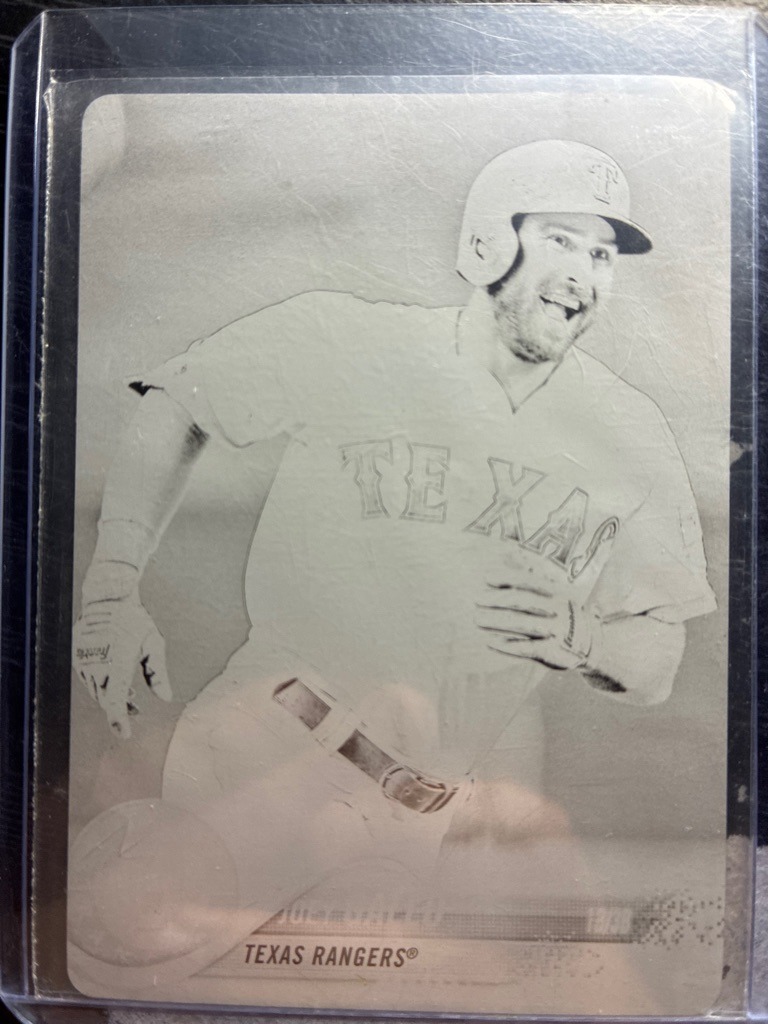
Ian Kinsler (Note: The user image actually depicts a baseball player, Ian Kinsler, in a Texas Rangers uniform, despite the prompt's focus on football cards)
Second Baseman · Texas Rangers
Topps Baseball Printing Plate #Varies by set
Year & Era
2010s — Modern Era
Card Type
1/1 Printing Plate Parallel
Grade
Raw — typical metallic plate surface wear (Estimated Authentic/Unaffected by traditional numerical grading due to plate nature)
Rarity
Unique 1/1 Master Piece — only four printing plates (Black, Cyan, Magenta, Yellow) exist for every single card in the checklist.
Overall Assessment
A unique 1/1 manufacturing artifact offering immense appeal for player super-collectors despite the image depicting a baseball player rather than a football player.
Condition Grade
Raw — typical metallic plate surface wear (Estimated Authentic/Unaffected by traditional numerical grading due to plate nature)
Centering Assessment
Standard manufacturing cut for metal printing plates; typically edge-to-edge design with minimal traditional border considerations.
Surface Condition
Metallic printing plate with standard factory manufacturing scratches, etched reversed image, and handling marks inherent to actual production items.
Corner Condition
Factory rounded corners typical of Topps printing plates, showing minor handling wear.
Edge Condition
Metal edges are generally clean with standard light factory roughness from the cutting process.
Print Quality
Actual metal printing plate used in the manufacturing process of trading cards, featuring reversed mirror-image etching.
Estimated Value
50 USD - 150 USD depending on the specific year, product, and dedicated player collector demand.
Comparison to Known Examples
Standard 1/1 printing plate appearance consistent with Topps production artifacts from the 2010s.
Authentication Tips
Verify against the actual base card image to ensure the etched reverse matches the corresponding Topps release; examine the metal thickness and back stamp if applicable.
Grading Recommendation
BGS/Beckett or PSA authentic encapsulation, though many collectors prefer to keep 1/1 plates in magnetic holders.
Red Flags
Check for unauthorized homemade reproductions or laser-etched blank metal blanks pretending to be genuine Topps printing plates.
Provenance Notes
Pulled directly from Topps packs or acquired via Topps Vault / secondary market distributions.
Historical Context
Printing plates represent the literal genesis of the physical card production process, highly sought after by master set builders and player super-collectors.
Market Trends
Printing plates hold a niche appeal; while true 1/1s, they often command lower prices than autographed or patch 1/1s due to their monochromatic appearance.
Investment Potential
Niche collector appeal with stable long-term value tied strictly to the popularity and legacy of the specific player.
Similar Cards
Other 1/1 printing plates from Topps Baseball or football products of the same era.
Display & Preservation
Store in a thick UV-protected magnetic holder (often 130pt or appropriate thickness) to prevent scratching the metallic surface.
Interesting Facts
Printing plates are physically used by the printing press to transfer ink onto large sheets of trading cards before being cut down.
Notes
1/1 printing plate