Earl Campbell
Running Back · Houston Oilers
Donruss Gridiron Kings / Revolution #Not visible
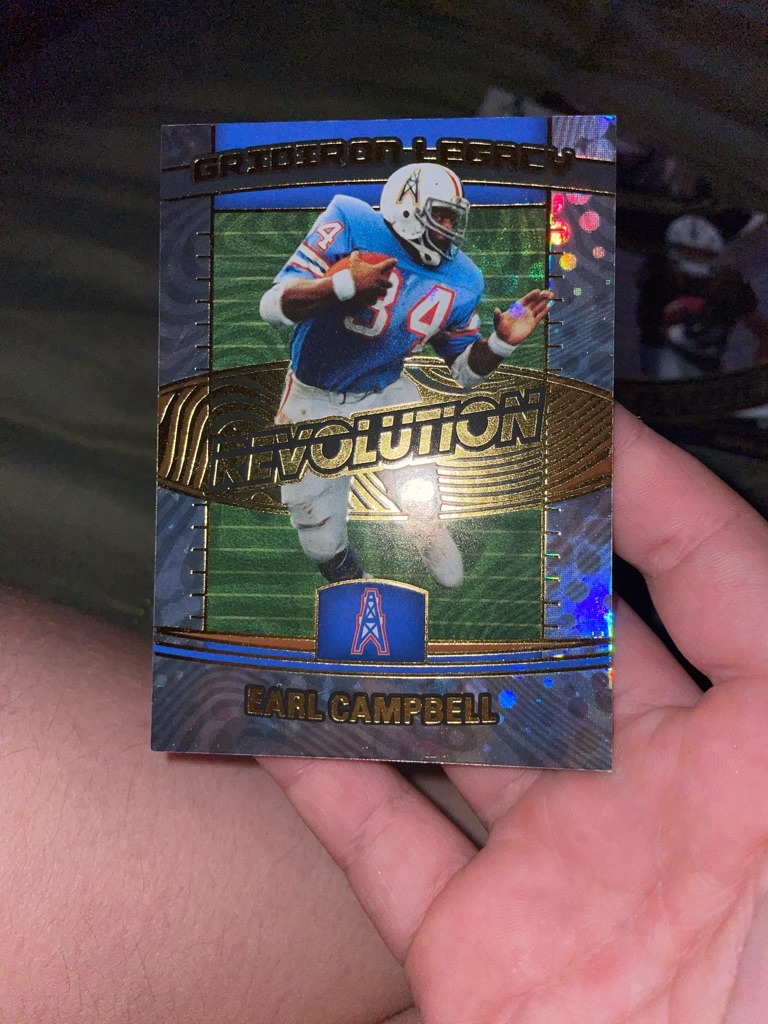
Year & Era
2000s — Modern Era
Card Type
Insert Parallel
Grade
Raw — appears Near Mint to Mint
Rarity
Scarce insert parallel, limited print run from early 2000s Donruss high-end products
Overall Assessment
A stunning and visually striking insert of a legendary Hall of Famer, offering great aesthetic appeal for any vintage or modern football collection
Condition Grade
Raw — appears Near Mint to Mint
Centering Assessment
Front: 55/45 Left-Right, 50/50 Top-Bottom
Surface Condition
Near Mint, clean refractor foil with minimal light handling marks
Corner Condition
Sharp corners with very minor touches visible under close inspection
Edge Condition
Clean foil edges with standard minor chipping typical of thick modern inserts
Print Quality
High quality chromium-style holofoil with striking refractor effects and deep embossing
Estimated Value
15 to 45 USD
Comparison to Known Examples
Centering and surface shine are above average compared to typical copies from this set
Authentication Tips
Check for correct foil stamping, authentic Donruss/Playoff card stock thickness, and sharp micro-etching patterns
Grading Recommendation
Raw display is recommended unless pristine, as grading costs may outweigh the modest value increase
Red Flags
No significant red flags observed
Provenance Notes
Originally pulled from early 2000s Donruss hobby boxes
Historical Context
Earl Campbell was a legendary power running back for the Houston Oilers, winning the Heisman Trophy and NFL MVP honors
Market Trends
Stable collector demand for Hall of Fame running back inserts
Investment Potential
Stable hold for player collectors, steady long-term value appreciation
Similar Cards
2002 Donruss Gridiron Kings Earl Campbell, 2001 Donruss Elite Primary Colors
Display & Preservation
Store in a premium penny sleeve and a magnetic one-touch holder away from direct sunlight
Interesting Facts
The Gridiron Kings subset is one of the most beloved insert designs in modern card history